Sous Vide Time, Temperature & Thickness Food Safety Guide
Dial in water-bath temperature and thickness timing safely, pair circulator wattage to container size and avoid vacuum seal leaks.
Precision water-bath cooking produces uniform edge-to-edge doneness only when bath temperature, cut thickness and seal integrity work together. Unlike skillet cooking, where high surface heat drives carryover cooking, sous vide requires holding food long enough for the exact center to reach target temperature safely.
Core time and temperature baseline (1-inch thick cuts)
Always verify temperatures with an accurate digital thermometer and follow USDA food-safety time-and-temperature principles, especially for poultry, pork and ground meats. Never hold perishable proteins below 130 F (54.4 C) for extended cooks (over 2 hours), as that sits inside the bacterial danger zone.
| Protein & Texture | Bath Temp | 1-Inch Cut Window | Finishing Note |
|---|---|---|---|
| Beef Steak (Medium-Rare) | 130 F (54.5 C) | 1.0 to 3.0 hours | Pat dry thoroughly; sear 45-60s/side |
| Ribeye / Marbled Steak (Medium) | 137 F (58.3 C) | 1.0 to 3.0 hours | Renders intramuscular fat cleanly |
| Pork Chop / Tenderloin | 145 F (62.8 C) | 1.5 to 4.0 hours | Meets USDA safe whole-muscle minimum |
| Chicken Breast (Tender) | 150 F (65.5 C) | 1.5 to 4.0 hours | Extended hold pasteurizes without drying |
| Chicken Thighs (Traditional) | 165 F (74.0 C) | 1.5 to 4.0 hours | Breaks down connective tissue cleanly |
| Salmon Fillet (Flaky) | 125 F (51.7 C) | 45 to 75 minutes | Short bath prevents albumin buildup |
Calculate adjusted bath windows for 0.75-inch, 1.5-inch or 2-inch cuts, plus raw-to-dry jerky weights, using our free Sous Vide & Dehydrator Yield Calculator.
Matching circulator wattage to container size
Circulator wattage affects two practical things: initial heat-up speed and temperature recovery when cold meat drops into the bath.
- 800W to 900W circulators: Well suited for covered 6-to-12 quart Dutch ovens and stockpots.
- 1,000W to 1,200W circulators: Faster warm-up and steadier control in 12-to-20 quart containers or multi-rack meal-prep tubs.
- Lids and insulation: Covering the pot cuts evaporation during 12-to-24 hour brisket or pork-shoulder cooks and reduces heater duty cycle dramatically. Compare models in our sous vide cooker comparison.
Preventing bag leaks and floating seals
A tiny pinhole or moist crease ruins an entire bath: 1. Use moist-mode sealing: Moisture drawn into the heat strip causes incomplete welds. Select the dedicated moist/wet setting or freeze wet marinades briefly before sealing, check seal-bar width in our vacuum sealer comparison. 2. Double-seal long cooks: For baths exceeding 6 hours or 155 F, press a second parallel seal 1/4 inch behind the first weld. 3. Weigh down light bags: Clip bags to the rim or place a stainless rack on top so trapped air never lifts meat above the waterline.
Dehydrator yield and airflow planning
When switching from water-bath prep to dry preservation, airflow geometry dictates whether you rotate trays. Horizontal rear-fan dehydrators circulate heat evenly across all stainless racks without flavor transfer, while bottom-fan stackable units need mid-cycle tray rotation. Compare tray square footage and temperature ceilings in our food dehydrator guide.
Food preservation & precision FAQ
Why does a 2-inch steak take more than twice as long as a 1-inch steak?
Thermal conduction through meat scales roughly with the square of thickness, not linearly. Moving from 1 inch to 2 inches increases minimum core heat-up time by more than 2.4x.
What wattage sous vide circulator is best for home pots?
An 800W to 1,100W immersion circulator heats standard 8-to-12 quart stockpots efficiently and holds steady temperatures. Larger 18+ quart polycarbonate tubs warm up noticeably faster with 1,100W+ models and a fitted lid.
Can I use standard zipper freezer bags for sous vide cooking?
Heavy-duty BPA-free polyethylene freezer bags work for short lower-temperature baths via water displacement, but multi-hour cooks above 150 F are much safer in heat-rated 3-to-4 mil embossed vacuum sealer bags.
How much raw weight shrinks during food dehydration?
Trimmed lean beef jerky loses 60% to 70% of raw weight, while apples and berries lose 85% to 90% as water evaporates.
More preservation & prep guides
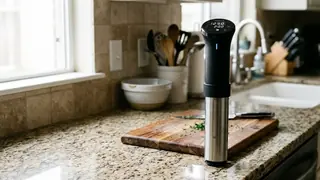 Sous VideBest Sous Vide Cooker Picks for Home Cooking (2026)Compare verified wattage, water bath capacity, and temperature accuracy to find the right sous vide immersion circulator for your kitchen.Read
 Vacuum SealersBest Vacuum Sealer Models for Food Storage (2026)Compare verified specifications, pump modes, and bag capacities to find the right vacuum sealer for freezing, pantry storage, and sous vide.Read
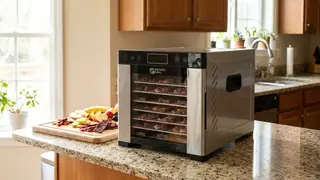 DehydratorsBest Food Dehydrator Models for Home Kitchens (2026)A spec-grounded guide to countertop and stackable food dehydrators, comparing airflow design, tray materials, and temperature ranges.Read
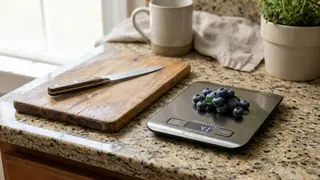 Scales & PrepBest Digital Kitchen Scale Models for Home Cooks (2026)A spec-grounded guide to digital kitchen scales, comparing weight capacities, measurement increments, materials, and power options.Read